
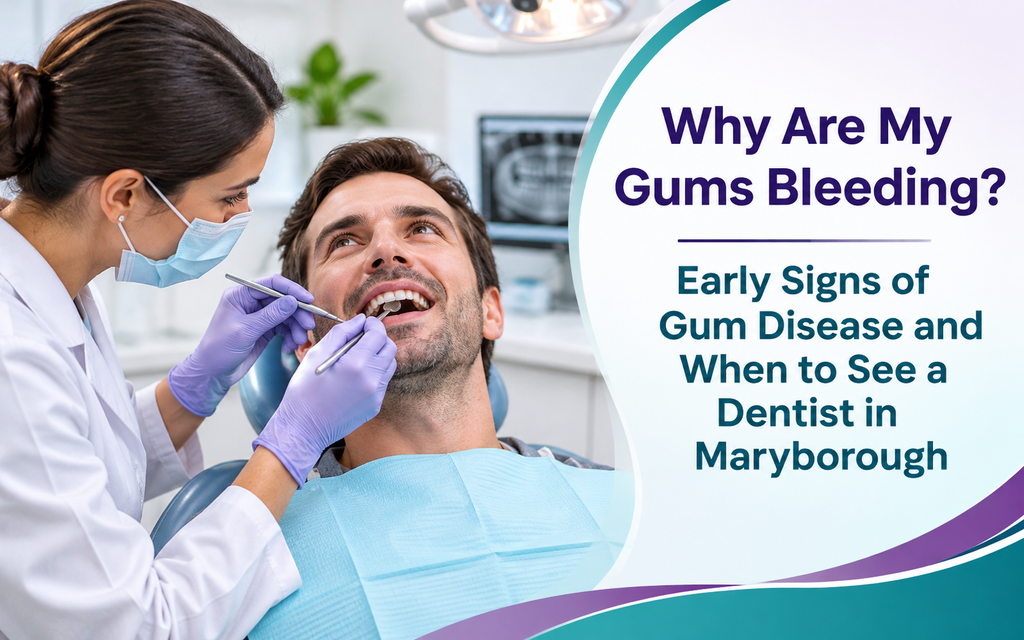
Have you noticed blood when brushing or flossing your teeth? Although occasional bleeding may seem minor, it can be a sign of an underlying gum problem. Understanding the early signs of gum disease can help you take appropriate steps to maintain your oral health.
At Maryborough Dental Practice, we encourage patients to pay attention to changes in their gums and seek professional dental advice when something does not seem right.
What Is Gum Disease?
Gum disease, also known as periodontal disease, affects the tissues that support your teeth. It generally develops in two main stages:
- Gingivitis: The early stage, commonly associated with plaque build-up along the gumline. Gums may become red, swollen and bleed during brushing.
- Periodontitis: An advanced form that can damage the tissues and bone supporting your teeth. Without appropriate management, it may lead to loose teeth and tooth loss.
Early identification is important because gingivitis can generally be reversed with appropriate oral hygiene and professional care.
Five Common Signs of Gum Disease
Look out for these possible warning signs:
- Bleeding gums: Blood when brushing or flossing may indicate gum inflammation.
- Red or swollen gums: Healthy gums generally should not appear persistently inflamed.
- Persistent bad breath: Unpleasant breath or a bad taste may be associated with gum problems.
- Receding gums: Gums may gradually pull away from the teeth.
- Loose or shifting teeth: This can indicate damage to the supporting structures and requires dental assessment.
Gum disease does not always cause pain, so the absence of discomfort does not necessarily mean your gums are healthy.
What Causes Gum Disease?
The main cause is plaque, a sticky layer of bacteria that collects on teeth and around the gumline.
Other factors that may increase the risk include:
- Inconsistent brushing and flossing.
- Smoking or tobacco use.
- Diabetes and certain medical conditions.
- Some medications that cause dry mouth.
- Family history of gum disease.
How Can You Maintain Healthy Gums?
A consistent oral hygiene routine can help reduce plaque build-up.
Consider these everyday habits:
- Brush twice daily using fluoride toothpaste and a soft-bristled toothbrush.
- Clean between your teeth daily using floss or suitable interdental cleaning tools.
- Avoid smoking and tobacco products.
- Maintain a balanced diet.
- Attend dental appointments according to your individual oral health needs.
Gum Disease Treatment in Maryborough
Treatment depends on the type and severity of the gum condition. Your dentist may examine your gums, assess plaque and tartar build-up and discuss suitable treatment options.
Depending on your needs, care may involve professional teeth cleaning, gum treatment and personalised oral hygiene advice.
Maryborough Dental Practice provides preventive dental services, including gum treatment and professional teeth cleaning.
Learn more about our Preventive Dentistry Services.
Frequently Asked Questions
1. Why do my gums bleed when brushing?
Bleeding may be associated with gum inflammation, plaque build-up or brushing technique. Persistent bleeding should be assessed by a dental professional.
2. Is gum disease reversible?
Early-stage gingivitis can generally be reversed with appropriate oral hygiene and professional care. Advanced periodontitis requires ongoing management.
3. Can gum disease cause bad breath?
Yes. Plaque and bacteria associated with gum disease can contribute to persistent bad breath.
4. How can I prevent gum infections?
Brush twice daily, clean between your teeth, avoid smoking and follow personalised dental care advice.
5. When should I visit a dentist for bleeding gums?
Arrange a dental assessment if your gums bleed repeatedly, appear swollen or become painful. Loose teeth or receding gums should also be assessed.
Looking After Your Gum Health
If you have noticed changes in your gums, consider arranging an assessment to understand the possible cause.